HARD MONEY HARD LIFE
Because life is hard, have you noticed?

I have just finished planting some banana, avocado, coconut and mango trees by our property in The Bahamas.
Immediately after planting: a drought hit the island, with scorching hot sun.
Luckily, we have a cistern where we collect rain water, but that means toting buckets and watering everything by hand.
Growing stuff from the land is terribly hard. Also catching fish is not very easy.
I fish with my kayak and I am quite good at it, but it is a lot of hard work compouned by the competition with sharks.
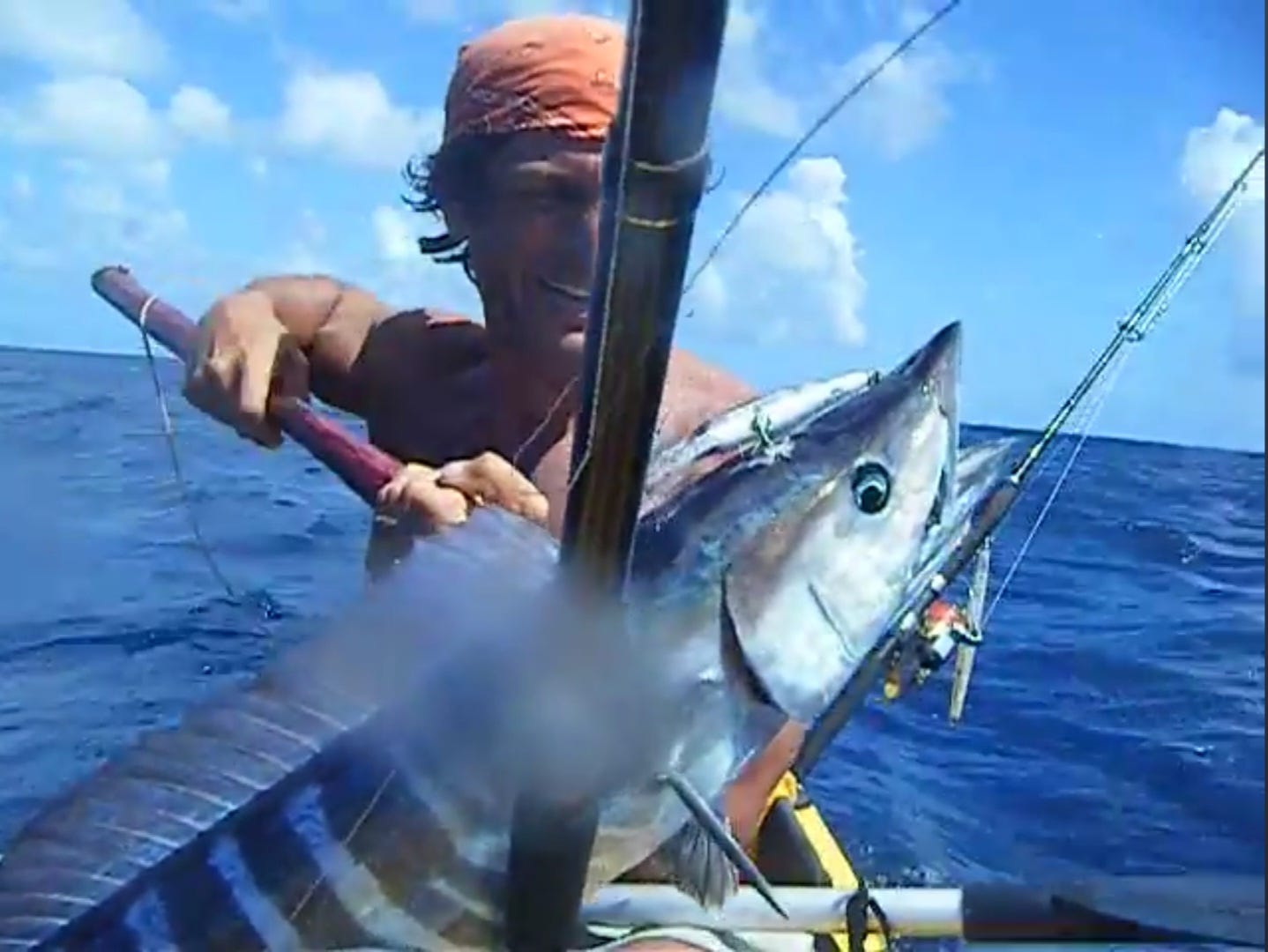
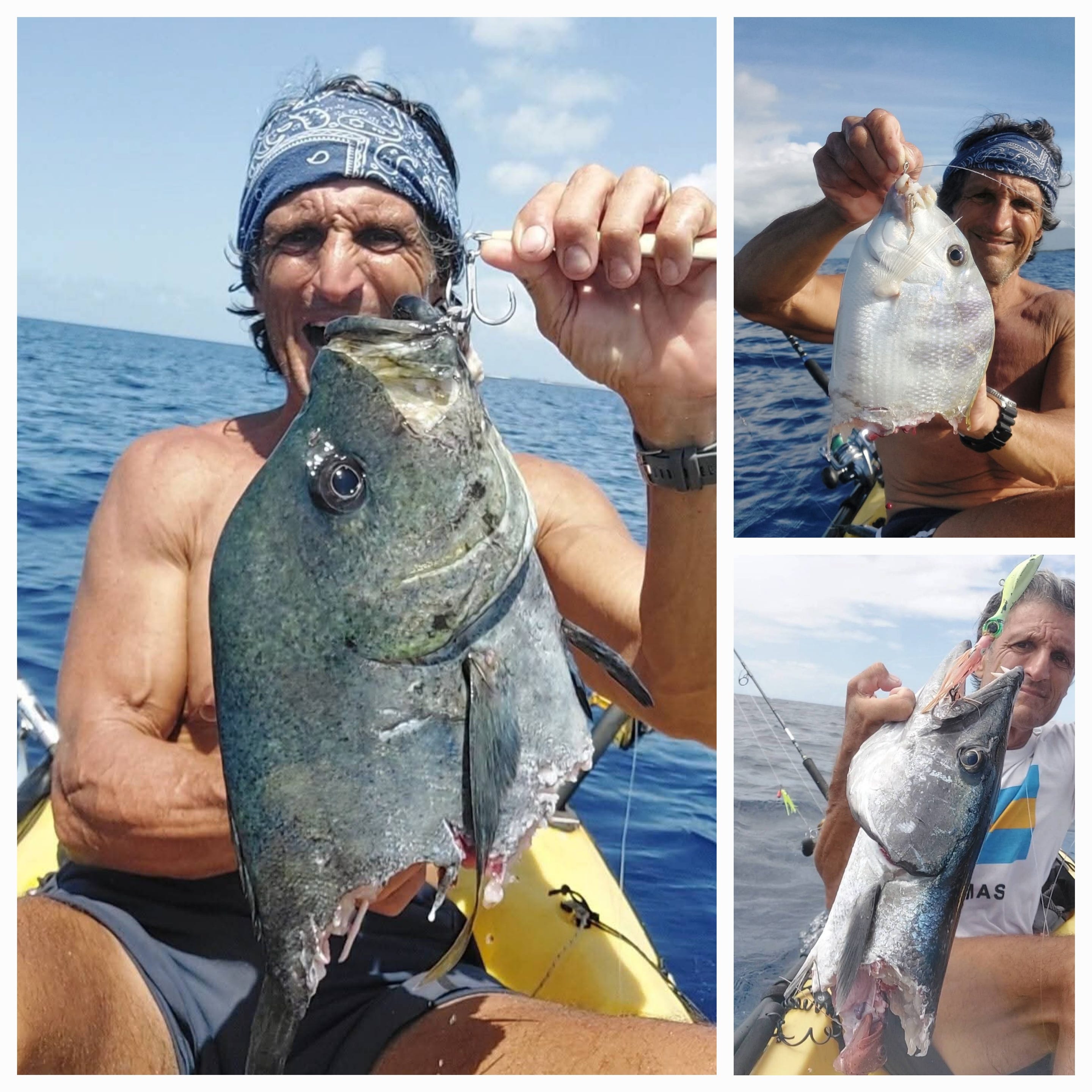
Here in the Island of Eleuthera, people are real survivalists.
Can it be done? YES!
Is is comfortable? NO!
Now, with progress, life is bliss. Air conditioning in every house, fancy cars, abundance of food, clothes and all of the amenities of modernity, but it is something that has only happened very recently.
My wife grew up here, with no electricity and no running water in the house until she turned 15. Water had to be obtained by the pump, and the toilet was outside.
Since hardly anyone had a fridge, they used to dry fish with the salt collected by the pond and corn was ground by hand with a metal mill. And only after this much work, one could enjoy a plate of fish and grits.
But life was even harder than this.
The history of the Bahamas is connected to that of piracy and slave trade. Both activities that are conducted on open seas, hence the additional challenges of navigation.
Slave trade is probably one of the most horrific chapters of human history, but it's hard to judge, because there is so much evil that has been done and that is still ongoing.
Here is a recap about how hard it was, taken from the history book written by Richard Sanders.
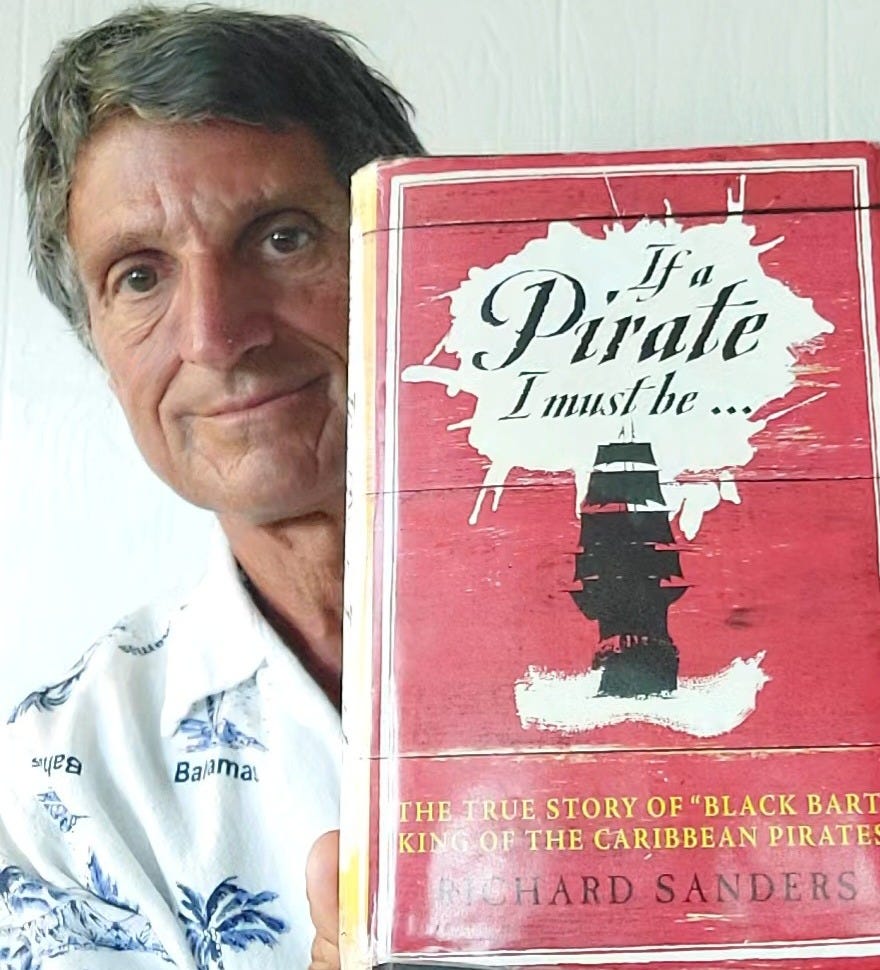
《 The slaves, for the most part, had been brought from deep inland by African traders. Most had been captured in war, enslaved as punishment for crimes or sold into slavery by relatives - often their own parents - as a result of poverty. A minority, particularly children, had simply been kidnapped. Thousands died on the dreadful forced march to the coast. But the greatest trauma of all came at the moment of boarding the slaving vessels. Many had never seen the sea. And while slavery was a widespread, commonly understood - if brutal - feature of African life, sale to the white man aboard these enormous 'ships with wings' for transport across the seas was as traumatising and disorienting as abduction by aliens would be for us. It was a peculiarity of the slave trade that both Africans and Europeans believed the other to be cannibals. One slave later described how he stared in horror at the slavers with their horrible looks, red faces and long hair', convinced he was to be eaten. The scene on the beaches was pitiful. The slaves were stripped naked and chained in twos to be hauled into the canoes by African boatmen.
Many fell to the ground and clutched frantically at the sand. Others threw themselves out of the canoes to be drowned in the surf. 'We have seen diverse of them eaten by the sharks, of which a prodigious number kept about the ships, wrote a merchant captain in the 1690s. Once on board they often infuriated their captors by putting their head between their knees and simply dying. European captains were convinced they had mastered the art of holding their breath until they suffocated. More likely they were suffering from extreme shock. Others starved themselves to death in the belief that when they died they would return to their own country. The slavers broke their teeth and forced food down their throats. [(More about this later, remember this part)]. When this failed they mutilated the corpses, cutting off the head and scattering the limbs about the deck, the Africans believing only a whole body could return home. Their brutality was in part a product of their own appalling conditions. Most of the crew knew that by the end of his voyage it was more likely he would be dead than one of the slaves. Studies later in the century showed that more than one in five of slaving crews died during the course of the three legged journey between Europe, Africa and the West Indies, compared to one in eight of the slaves - although they, of course, were on board for only one leg of the journey. Malaria, to which many Africans were immune, was the great killer. Seamen were painfully aware of mosquitoes - "troublesome devils [which] would sting through clothes'. But the state of medical knowledge was primitive and no one had yet made the link between the insects and the disease. ‘The fever generally begins with a violent Pain and dizziness of the head,’ wrote a Royal Navy surgeon, describing an outbreak off Africa in 1721, 'Nausea, vomiting and restlessness followed. 'The patient... falls into excessive sweats… inextinguishable thirst and involuntary urinating,' Then came 'either delirium, convulsions or speachlessness.
“I have never seen among my people such instances of brutal cruelty, and this not only shown towards us blacks but also to some of the whites themselves,” wrote one slaves. Conditions aboard the slavers were appalling even by the standards of the merchant navy at that time. Water and food were always in short supply. Alexander Falconbridge, a ship's surgeon, described seeing a sailor rise at dawn to lick the dew from the roof of the chicken coop. On another voyage sailors were caught begging for food from the slaves. Once the slaves were aboard the crew was generally obliged to sleep on the open deck with only a tarpaulin for cover. In poor weather, conditions quickly deteriorated for everyone on board. One sailor recalled watching 'steam coming through the gratings, like a furnace' from the slaves confined below. Nevertheless, it was not unknown for crewmen to open the hatches at night and lower themselves into this hell to escape the wind and the rain.
Slaving crews were generally drawn from the lowest class of seamen, and many were on board no more willingly than the slaves. The method at Liverpool [of getting sailors] is by the merchants' clerks going from public house to public house, giving them liquors to get them into a state of intoxication and, by that, getting them very often on board, recalled one sailor. Another method is to get them in debt and then, if they don't choose to go aboard, they are sent away to gaol by the publicans they may be indebted to.' Once off Africa, the men sometimes swam through shark infested waters to Royal Navy vessels in order to escape. The captains regarded their men as ‘the very dregs of the community’, and treated them acordingly. The surgeon Falconbridge described one captain who forced a crew member to work for weeks with a heavy chain attached to a log wrapped around his neck for a minor misdemeanour. He then floged him till his back was raw and rubbed salt and cayenne pepper into the wounds. Afterwards 'a large Newfoundland dog was frequently set at him, which, thus encouraged, would not only tear his clothes, but wound him. At length, after several severe floggings, and treatment, the poor fellow appeared to be totally insensible to other beating, and careless of the event.
Captains had absolute power on board their ships. “I am as absolute in my small dominions, as any potentate in Europe. If I say to one, come, he comes; if to another, go, he flies”, wrote one. All too often this power was combined with a sadistic temperament. Brutality could serve a purpose. A large crew was necessary for security until the ship docked in the West Indies. But thereafter, with a cargo of sugar on board for the final leg of the journey back to Europe, many of the men were surplus to requirements. At that stage captains were often happy to see them desert, particularly if they were owed back pay. Others would sail away while part of their crew was ashore. These abandoned, emaciated seamen were a common sight on the docks of towns like Kingston in Jamaica where they lay side by side with the refuse slaves' who could find no buyers and were left to starve.》
This narration brings me back to TODAY.
The concept of:
Ruthless captains, who only care about profit
Men categorized as “surplus to requirements”.
Workers abandoned with owed back pay and left to fend for themselves.
All of the above, is perfectly summarized in this Facebookvideo clip:
https://www.facebook.com/share/r/1F82XxnKBB/
Asked how is it like to be homeless in Portland, the toothless lady answers: -"It's a piece of cake”. Practically, she said that they are given three meals a day and lots of dope. Basically you're not required to do anything.
Well, she reminded me a lot of the guy on the ship, beaten until toothless and to the point where pain could be no longer felt.
The context has changed but not the nature of the “CAPTAINS”.
So far, let's admit it. In the so called developed parts of the world, life has been very pleasant. Abundance of food, hot showers, hygiene, superfluous amenities, unlimited entertainment and so on and so forth. All of this has been possible by the expansion of debt.
Using debt based money implies: “borrowing resources from the future to live a better now”, as Gregory Mannarino has rightfully said.
Without debt, life would be very hard for almost everyone. Borrowed money allows for gratification today by mortgaging the future. That is why, when the future arrives, everything gets worse. But who is willing to give up even an atom of pleasure? NO ONE. And that is why the system is adopted—by overwhelming popular choice.
The debt based system is a fantasy. It is like cheating. Like doping. It works until it doesn't and requires ever increasing quantities until it collapses.
The consequencesof the collapse are becoming more and more evident every day, but I think that the video clip of the homeless lady in Portland is the perfect metaphor for what is happening. A slow deprivation combined with chemical numbness.
DEBT MONEY IS SOFT MONEY.
GOLD IS HARD MONEY.
Soft money has made the population soft and mushy and therefore power can be imposed easily. “When the CAPTAINS say go, people go…nothing has changed. Brutality is disguised under the cloak of complexity.
The question is? When the debt money system collapses, how sotf are you to face it?
If you are satisfied with being
Homeless
Three meals per day
Unlimited drugs
Well, PROBLEM SOLVED!
If you aspire for a better life, start preparing and harden up.
Freedom is HARD. You acquire it with real work, and you measure it with real money.
The future belongs to those who deserve it. Don't give up without a fight.
Stay safe.
Andrea Cecchi.
Ps. For information about investment in the Bahamas.
Here is my contact information:

Email: ANDREACECCHI@BAHAMAS.GOV.BS
Tel. +1 242 5513219